- cross-posted to:
- programmerhumor@lemmy.ml
- cross-posted to:
- programmerhumor@lemmy.ml
You must log in or # to comment.
deleted by creator
When you need a nannybot? Yes.
Why stop at feeding? Where’s the penis and vagina tubes? We might as well be jorkin’ it too if all the rich and powerful are.
It does mention “all the other tubes”. I wonder if it will be THX 1138 style.
I hope its like a Geigeresque device that makes us sit shrimp style and cups backwards from our gooches to our mouths.
Alexa, play Spankfest 8.
in this one picture, I see generations of so many individual great ideas coalescing into one fantastically bad idea (and stupidly comical consequence) that is so… bizarre that I can both simultaneously understand why nobody really saw it coming, and am in low-key disbelief that this is even real…
of course it’s not, because every laptop and airpod has noise cancelling
But as far as rage bait goes, top tier
I think this is a microphone with noise isolation, rather than noise cancelation from speakers.
Thanks, edited for meaning
I mean, that’s a steno mask, and anyone who’s had issues with hand pain but wants to communicate via text has probably wished for something resembling this. The problem is that they’re obnoxiously expensive. (And they look ridiculous, but that’s its own issue.)
When I’m in public, I wish people had these. I neither need nor want to listen to your phone conversations.
Their price is so dumb, that thing shouldn’t cost that much
Just like those accessibility tools that let you use control the mouse pointer using only your mouth etc etc, they have stupid prices when some aren’t even that complex
I would rather do almost anything than talk to a device, except in very specific circumstances.
I set timers and play music on a smart speaker somewhat often.
Occasionally, when I am alone, know exactly what I want to say, and my hands are full, I might dictate a text message.
But other than that, I will not be talking to my device, thanks. The human voice is primarily for talking to other humans, with all the imprecision and uncertainty and emotional resonance that entails. Keyboards are great tools designed for precise computer input, and I would like to continue to use them.
i dont think ive ever used a speach computer interface that wasnt hot garbage and misunderstood half of what i said unless i talked to it really slow like it was an idiot. pretty much every time it would have been faster to use the tactile interface. i dont even have that much of an accent compared to generic american.
Did the CEOs unplug their keyboards? Wtf even is this?
Well the mask is a steno mask
Theoretically most people will speak faster than they type. You have to type around 180-200 wpm to be faster than speaking.
(I say theoretically, because usually typing speed ratings also ding you for errors, and uh, speech transcription isn’t really there, either.)
The hard part of both speech and typing is thinking about what you say. Typing nor speaking are going to change the speed I can get information into the computer.
Maybe we could ask the AI to do that thinking bit then tell us what to say.
Hey Siri, tell ChatGPT what it wants to hear to generate a million dollar code piece.
I’m not really into it but one of the guys on late night linux podcast, generally resistant to LLMs and shiny new things, is a fan of speech to text for general computing, as in every input field in the OS should support speech. In a recent episode he said that he believes it to be the way of the future.
I remember
Dragon SpeechDragon Naturally Speaking saying the same thing in the 90’s. It’s improved, but not enough to make it useful as more than an aide for people who can’t type. I do agree, that for simple accessibility, it should be integrated into every field, but I doubt it’s ever going to take over.As others have noted, that it’s only technically true that dictation is faster than typing. In a practical sense, there’s a fair number of reasons why that’s not the case, including that usually thinking about the entry is what’s the slowest, and also the errors in both are typically what slows people down.
there’s also the problem of, for example, keeping entries confidential. You don’t want to speak your passwords where others can hear you.
I remember Dragon! And ViaVoice! I saw a presentation for ViaVoice in the late 90s and it blew my tiny mind.
It really was the future. And it’s… a bit better since then. Oh god thats like 30 years ago almost
It’s improved, but not enough to make it useful as more than an aide for people who can’t type.
I don’t think this is true.
There’s a locally hostable model called whisper that is very impressive.
My plumber uses speech to text to send text messages all day.
Late Night Linux guy says he uses it for microsoft teams quite a bit.
You’re only partially correct about input speed. If you want to dictate an email then yes you need to think about each word you want to say and the order in which to say them. Coupled with an LLM that problem is diminished because you can just kind of have a conversation with the LLM and tell it to draft an email.
You’re only partially correct about input speed. If you want to dictate an email then yes you need to think about each word you want to say and the order in which to say them. Coupled with an LLM that problem is diminished because you can just kind of have a conversation with the LLM and tell it to draft an email.
and how much of that conversation with an LLM is “No, what I want is…” because it assumed something; or just straight up hallucinated or the typo made it go off on a tangent?
As for whisper, I can find sources that are saying for American-English speakers in a not-noisy environment (aka the best case scenario,) the model has a word error rate between 2-8%. For reference, Dragon NaturallySpeaking had a WER of 3-5%. So I wouldn’t say that Whisper has made any substantial improvements, and they’re OpenAi. you can trust them if you want. I don’t think that’ll work out well in the long run, though.
I’d like to see the source that says Dragon’s WER in the 90s was 3-5%. I used Dragon in the 2000s and it just wasn’t comparable to the current state of the art.
whisper.cpp is an opensource implementation, although I’m not certain exactly how open.
when you’re providing context rather than instructions the tendency for a model to hallucinate or run off on a tangent is minimal, because the context you’re providing has it’s own cohesion.
I’d like to see the source that says Dragon’s WER in the 90s was 3-5%. I used Dragon in the 2000s and it just wasn’t comparable to the current state of the art.
https://dragon-medical-transcription.com/history_speech_recognition.html, for example. a lot of adverts and awards were given to it (admittedly awards like PC Mag that were probably paid advertising… but that’s why I went with Open AI’s assessment on whisper at 2%.) Dragon was boasting 99% accuracy after (admittedly months) of training; and it frequently reached it. there were some gotchas in that- the months-long training was a big one. The other was that you frequently had to slow down and be careful to enunciate that you don’t have to do with modern systems (including the MS versions of Dragon- they bought it out at some point)
whisper.cpp is an opensource implementation, although I’m not certain exactly how open.
It’s on the MIT license, if that helps. I take issue with anything OpenAI is involved in. for oh-so-many reasons.
The furry mask, which was the style at the time.
“Ah, dang it, I showed up late and they’re out of masks. I guess that means I’ll have to use the voice-cancelling ball gag again…”
Well, we’ve always known that the internet is a series of tubes.
Fuck AI, but if this was something those loud public phone people could wear that would be great. Like the dude shouting into his phone on the bus, pair it with some headphones leave us in peace
So they know their products would be useless in a noisy environment? They can’t pick out the voice they need like an actual human being can in a crowd (excluding some with hearing difficulties)?
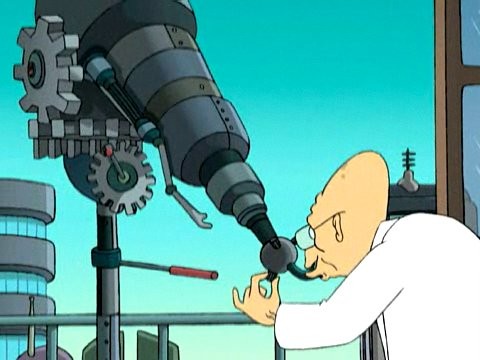
Wasn’t that to sniff, smell, different galaxies. Still funny tho
Or, listen me out, they could work from home.
Working from home doesn’t appeal to the emotional needs of fragile managers.
It doesn’t appeal to the emotional needs of a bunch of my colleagues who are in the office every day voluntarily either.
Yeah, I have colleagues who choose to work in the office when work from home is available because they like the separation of work from home, don’t have a good spot to work from home, are aware they would be distracted at home, prefer to see other people in person, and a bunch of other reasons. At least they get a choice!
Every day I’m a little surprised there’s no news story of some workers beating their “no, you have to come into the office” manager to death. They’ve got means, motive, and opportunity, and it’s extra funny because if they’d been allowed to work at home they wouldn’t have at least two of those.
But really we’re ruled by the worst of us. Cowards and fools.
Maybe unionizing is safer than hitting the decision makers with an office chair while screaming “you made this possible” until they can’t even cry anymore.
Well what I’m trying to tell you is that there are probably more people than you realise who want to be in the office. My partner, and a bunch of my coworkers, hated being forced to work from home during the pandemic. So maybe that’s part of the reason.
Oh, I read your thing backwards then.
I can’t imagine wanting to go into the office on the regular. The commute. The lost time (can math out to like a 20% pay cut, if you spend two hours a day traveling + getting ready). The sickness. The lack of control over environment (temperature, sound).
Can’t relate to it. And I’m a very social person that likes interacting with people.
I live 15 minutes from work. If I got out of bed early enough I could easily bike there (and have done so).
Really the only thing I miss from work from home is the ability to take a short break once per hour to do some bodyweight exercises or kettbell swings during lunch.
But on the flipside, it’s hard for me to stay concentrated while at home. I personally get way more work done in the office.
But on the flipside, it’s hard for me to stay concentrated while at home.
While I believe that is true for you, I don’t believe it justifies the lost time, health, and environmental damage of mandating in-office for everyone.
The office is super distracting for many people.
I forget where I read it, but apparently this is being pushed to replace or augment court stenography. Apparently, there is more demand for court recorders than stenographers to fulfill (not sure if this is true, but that’s the claim), so this option is being proposed as the AI dictation requires less training than stenography.
It’s a different tool, but for much the same end. I want to say it’s more because the device is cheaper than a typical stenography machine would cost.
Please don’t show this to my boss.
Chat is this real?
zucc9000