rule
You must log in or # to comment.
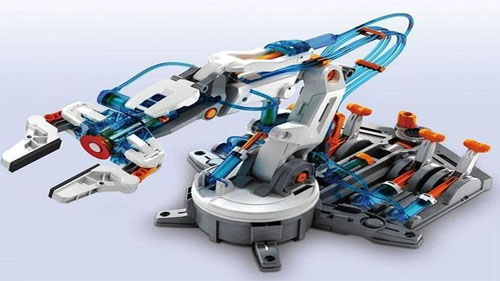
You need only two fingers, as long as they are 1 ton hydraulic clamps.
I can do both of these with regular hands…
deleted by creator
I can do both of these with
regularmy amazingly nimble super handsFixed it for you 😛
If I had neural linked prosthetics I’d be down to try stuff like that
Eh, we don’t have a way to mimic proprioception, so you’d basically have to constantly concentrate on every aspect of what you’re doing and rely on visible ques. You’d basically be giving yourself peripheral neuropathy.
Heretofore unknown ways of dropping in an alka seltzer
I can open a bottle with one hand already by gripping it with my pinky and palm? Whats the point
I think it’s that they’re holding the bottle while opening it

I can open and close a milk bottle with the hand holding it. Learned this is an office where the nearest counter to the fridge was way across the room.
I can screw with my hands tied behind my back. The design is superfluous. Do better
Oops all thumbs
part of the problem with this hand design is lack of grip strength. theres a trade off between dexterity and strength because the more mobile a joint is the more positions it can be in with suboptimal leverage, and a more mobile joint is less stable and thus more difficult to exert force through without fumbling whatever its trying to do.
you can see this in the relative strength between humans and chimps. we have much higher dexterity and range of motion than chimps, at the expense of being much weaker. we can throw with power and accuracy and use a lot of tools very well, but most chimps would easily over power us in raw strength while being quite bad at throwing and tool use relatively speaking.
a more dextrous human hand would simply take this tradeoff further toward dexterity and away from strength. looking at how difficult life is for people with poor grip strength i dont think we have much we can afford to give up, and the extra dexterity wouldnt be that much of an improvement. honestly id rather have four arms with standard human hands than two with these special hands.
Yes, but also this is about robotics so that kind of all goes out the window to some extent. You can just have more powerful actuators to increase grip strength or whatnot. That said, biologically, I’m totally with you on the four arm thing.
thats not really true at all. these are features of physics not biology, so robotics have the same tradeoff. in robotics its even worse though because we currently have no actuators that are capable of matching biological muscle in terms of combined speed, force, and precision, let alone in such a small package. if you make a robotic limb capable of the force of a human hand it will be incredibly stiff and slow, or require actuators that are too large and heavy to be feasibly carried by a person, to say nothing of the energy storage. in practice robotics capable of functioning as prosthetics are either sufficiently strong but totally lacking in any dexterity, or have dexterity but are very weak and/or slow compared to biological hands.
the actuator problem is pretty much the single biggest barrier to creating prosthetics that rival the functionality of human hands. people have been working on it for decades, and while there have been some interesting results, nothing has come close to being even a poor replacement for biological muscle. when we finally figure it out, which i think is inevitable if we continue to survive as a species, the robotics we make with them will operate under the same physical constraints as biological bodies.
Fair enough. You seem to be more knowledgeable about this than me. I get that its an inherent physics thing though I just meant that, theoretically at least, you could simply brute force grip strength in a way that you can’t brute force dexterity - at which point it becomes sensible to optimize for dexterity. I guess we’re not as close to that point as I assumed though.
we currently have no actuators that are capable of matching biological muscle in terms of combined speed, force, and precision, let alone in such a small package.
And as durable. People don’t really know how much force you are working with as a body in motion. Ground reaction force for a small jump can be 7x someone’s body weight. So a person weighing 200lb can have 1400lbs of mechanical load being distributed by the feet and ankles. I build and fit prosthetics, it would surprise most people how general use can trash materials like reinforced carbon fiber and titanium. You do the same to your body, but your body repairs itself.
make a robotic limb capable of the force of a human hand it will be incredibly stiff and slow, or require actuators that are too large and heavy to be feasibly carried by a person, to say nothing of the energy storage.
Yep, the actuators in prosthetic limbs are typically located in the wrist, or in the actual terminal device, which makes them pretty clunky. People have tried making ones that are housed further up the limb, but then you are working against the length of the lever arm. Your biceps brachii insertion can exert about 10x more force than what you can curl, it just seems weaker because you have a leverage disadvantage.
They used to have a operation where they attached a terminal device to a trans radial prosthetic directly to the bicep, but those guys could close the terminal devices(claw) with anywhere from 350-500lbs of pressure.
the actuator problem is pretty much the single biggest barrier to creating prosthetics that rival the functionality of human hands.
It’s one of the problems, though I don’t think it’s the main one. The main problem is mimicking anything close to the propeceptive abilities that humans have. The mind body connection that you have to your hands is just eons away from anything we currently have. The current tech most advanced limbs utilize is myoelectrics, which have been around since the late 70s and are for the most part unchanged. There have been some pretty cool improvements in nerve reintegration, but it’s not really a feasible technology atm as it takes dozens of hours for a team of surgeons and a special candidate for a patient.
I would say the second biggest hurdle, especially for lower limb prosthetics is energy storage, it’s not fun to lug around a heavy ass lithium battery that you have to recharge every few hours. Upper limb uses less energy, but only because there’s only so much they can do atm.
I know to a lot of you I’m killing your cyberpunk dreams, but you will never have a limb that even comes close to the quality and utility as your current healthy limb. The technology just isn’t anywhere close to where a lot of people believe it is.
you can do the one on the right with a regular human hand
But imagine how many more bottle caps you could unscrew if you had 5 thumbs.
You can also unscrew a bottle cap wit one regular human hand
Left - right hard, apparently.
Also you can unscrew a bottle cap from a bottle with a regular human hand
You can even do it with your own hand.
I think I can bottle with one hand myself.
So multiple hands on your hands would be better
I wonder how good they are for fingering…
I like how you think
Pretty soon they’ll be all thumbs! What could go wrong?
Babe, please don’t rip my dick off on accident with your cyberpunk hands.
or do! then you can upgrade to cyberdick
We (apparently) have the tech for cyborg hands, mechadick is only a stone’s throw away.
This a solved problem. The solution is called the electric screwdriver. If you want one as a prosthetic, go for it.