Through pushing through user antagonistic changes completely at odds with users wants and hoping people are pliable enough to forget all about trying to be screwed so you can bide time until the next at attempt to screw users?
Well, that’s the vibe I’m getting from you. I naively assumed open source was based on trust, shared effort and contributions to benefit users so they can install software on their machine that they know is reliable/trustworthy and privacy focussed because anyone can scrutinise it. Silly me.
Ideally we would have something that’s more dehierarchized, but until someone figures out how to do that, all open source repositories have a group of maintainers (or some other name for those who have commit access) who need to (individually) approve of contributions. As it stands, open source is indeed shared effort, but shared effort that has to be approved by a member of a cabal. There’s a reason stewards are often called https://en.wikipedia.org/wiki/Benevolent_dictator_for_life (which is indeed a slightly different concept, but hopefully you get my point that chief maintainers have lasting influence and power).
It’s still much better than other levels (i.e. proprietary). When maintainers slog behind community PRs and wishes for too long and/or persistently screw them up, a critical mass of users leaving will build for alternatives created, accelerated by the fact that most of your project’s users are going to be enthusiasts accustomed to switching and upholding open source principles.
In summary, yes, maintainers make decisions to make users (or some shared vision) happy and are supposed to backtrack when enough of the users object. This is true whether the change is antagonistic or not. What you said in your first paragraph is the opposite of that. (I guess my initial question was what do you think should be the reason to backtrack other than users aren’t happy. “Users are hurt” is the same thing as “Users aren’t happy”.)
As for Audacity? It’s been four years with no attempts, so Tenacity doesn’t look like it’s going to pick up momentum. Until the next incident, Users won’t believe they’re being screwed (and I agree with them) and aren’t building that critical mass. (I also object that the opt-in telemetry PR was antagonistic.)
It’s as Tantacrul (the new head designer of the app) would put it
A lot of little things that all add up
The app was taken over by the Musescore team, owned (as in, paid a salary by) a russian private company called UltimateGuitar.
They’ve already made a lot of really, really bad decisions in regards to Musescore itself. If you don’t know, Musescore is an app similar to Audacity that UltimateGuitar took over some years before they did Audacity. And they did a bunch of moves the FOSS community dislikes.
They’re bound to do the same to Audacity. They just had a lot less time to do it and a lot more pushback from the much larger (and as such more healthy) Audacity community.
They’ve added a bunch of features. They also fixed core faults with the app: included nondestructive editing and fixed some UX issues.
Which is great.
However, these positive things are just the tip of the “changes” iceberg. And the bottom gets dark, fast.
Firstly, they tend to make bloat. Musescore 2 and 3 ran mich faster than Musescore 4. It isn’t even comparable, and Audacity is bound to follow the same path.
The new UI looks great, but it introduces its own issues. Such as turning the app’s UI into a generic modern one, which some people dislike. With Musescore the changes were relatively contained, but Audacity’s UI, UX and workflow was changed as fundamentally as it could have. Old Audacity and New Audacity are basically different tools to learn because of it.
And the switch to New Audacity is easier for users from any other DAW (such as Protools, Logic, Ableton) than Old Audacity. Because Old Audacity wasn’t a traditional DAW, but it became one.
Then there’s the final layer: all the changes a for-profit overtake means for a FOSS project.
Musescore was changed from a fully offline app to one tightly integrated into an online ecosystem. Musescore (the UltimateGuitar brand) really wants you not to save your files to your computer, but to their online score sharing platform musescore.com.
They also added telemetry and tracking to the app.
They also did a logo redesign. At first it was the old logo, objectively fixed.
But after not even five years of new management, the old logo was fully scrapped to be moved in line with other UltimateGuitar products. In other words, it was stripped of its personality.
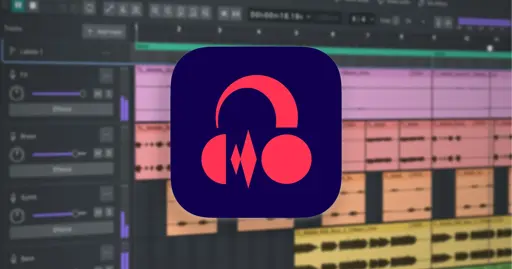
The same is bound to happen to Audacity. In fact most already did. The new Audacity logo is absolutely abhorrent. Tantacrul (aforementioned head designer) adressed it in a video, but the explanation is very shallow to the point of being downright insulting.
Then there’s the “CLA thing”. You can see the drama firsthand on GitHub (link). But what I’d specifically like to point out is not the main post (read the first paragraph and skim the rest, it isn’t worth reading), but rather the comments under it which do a good job at disspelling the talking points used in the post itself. The commenters over there are much more competent at linking good sources than me, so please feel free to click on some.
A nice example of past corporate FOSS takeovers is listed quite nicely here, but it doesn’t give any nuance nor list the common strategies used, or how both the app and its users are harmed by that.
There’s also a nice discussion over on lemmy.ca (this one), but it requires quite a bit of background in FOSS terminology to be fully graspable.
A small part of the specific Audacity situation is explained quite nicely here, and a more lenghty discussion is available on the forum “Hacker News” (link).
Hope these links feed at least some inquisitive minds :-)
the switch to New Audacity is easier for users from any other DAW (such as Protools, Logic, Ableton) than for Old Audacity users
as an Old Audacity user I disagree with that. it is still extremely hard to use audacity as a DAW because it’s very much still a multitrack audio editor with some beat-based features and non-destructive effects. i don’t think clips were too hard to adjust to
Musescore was changed from a fully offline app to one tightly integrated into an online ecosystem.
I am also an old Musescore user. You would be a little right to talk about audio.com and pretty on the nail to talk about MuseHub but musescore.com absolutely not. musescore.com’s been a thing since 2010 (MuseScore was only founded 2008 and acquired 2017) with the “Save Online” feature. Hal Leonard sued this small project for storing copyvio scores back in the old '10s (and now Muse Group owns Hal Leonard). And it’s not like they’ve “integrated” it any more either; it’s just blumming uploading scores same as it always has been since 2010.
look at MuseHub. those shiny new effects and mixing, we advertise them so much, they’re free, they’re groundbreaking, you have to use proprietary MuseHub. the entire Muse Sounds stack is proprietary. and even then you can still use MuseScore entirely offline to do anything it could do in 3.x (that’s pre-acquisition for those unfamiliar with MuseScore version numbers).
I really dont know what you’re talking about. Audacity 4 is nowhere near a DAW and its UI/UX is not horridly different compared to previous versions or “generic modern” (as if being a generic modern UI is a bad thing). Can’t say much about the logo but seeing that and thinking sperm instead of headphone is pretty funny, I think its pretty clear that its an headphone. Musescore and Audacity are also very different programs and Musescore.com has existed since 2008.
This entire comment just feels like “waahhh I hate change”. I think its about time audacity received a proper refresh.


What’s enshitified about it?
They tried to add in opt out telemetry in. A few forks were created as a result.
it was never opt-out, it was always planned to be opt-in
I think originally it was the other way and many distros use a compiler flag to stop it being opt out.
the code was never even merged; that’s definitely not true
So they raised a PR with the intention to do this?
Are you saying the only reason they backtracked is because users weren’t happy?
How do you think open-source development works?
Through pushing through user antagonistic changes completely at odds with users wants and hoping people are pliable enough to forget all about trying to be screwed so you can bide time until the next at attempt to screw users?
Well, that’s the vibe I’m getting from you. I naively assumed open source was based on trust, shared effort and contributions to benefit users so they can install software on their machine that they know is reliable/trustworthy and privacy focussed because anyone can scrutinise it. Silly me.
Ideally we would have something that’s more dehierarchized, but until someone figures out how to do that, all open source repositories have a group of maintainers (or some other name for those who have commit access) who need to (individually) approve of contributions. As it stands, open source is indeed shared effort, but shared effort that has to be approved by a member of a cabal. There’s a reason stewards are often called https://en.wikipedia.org/wiki/Benevolent_dictator_for_life (which is indeed a slightly different concept, but hopefully you get my point that chief maintainers have lasting influence and power).
It’s still much better than other levels (i.e. proprietary). When maintainers slog behind community PRs and wishes for too long and/or persistently screw them up, a critical mass of users leaving will build for alternatives created, accelerated by the fact that most of your project’s users are going to be enthusiasts accustomed to switching and upholding open source principles.
In summary, yes, maintainers make decisions to make users (or some shared vision) happy and are supposed to backtrack when enough of the users object. This is true whether the change is antagonistic or not. What you said in your first paragraph is the opposite of that. (I guess my initial question was what do you think should be the reason to backtrack other than users aren’t happy. “Users are hurt” is the same thing as “Users aren’t happy”.)
As for Audacity? It’s been four years with no attempts, so Tenacity doesn’t look like it’s going to pick up momentum. Until the next incident, Users won’t believe they’re being screwed (and I agree with them) and aren’t building that critical mass. (I also object that the opt-in telemetry PR was antagonistic.)
It’s as Tantacrul (the new head designer of the app) would put it
The app was taken over by the Musescore team, owned (as in, paid a salary by) a russian private company called UltimateGuitar.
They’ve already made a lot of really, really bad decisions in regards to Musescore itself. If you don’t know, Musescore is an app similar to Audacity that UltimateGuitar took over some years before they did Audacity. And they did a bunch of moves the FOSS community dislikes.
They’re bound to do the same to Audacity. They just had a lot less time to do it and a lot more pushback from the much larger (and as such more healthy) Audacity community.
They’ve added a bunch of features. They also fixed core faults with the app: included nondestructive editing and fixed some UX issues.
Which is great.
However, these positive things are just the tip of the “changes” iceberg. And the bottom gets dark, fast.
Firstly, they tend to make bloat. Musescore 2 and 3 ran mich faster than Musescore 4. It isn’t even comparable, and Audacity is bound to follow the same path.
The new UI looks great, but it introduces its own issues. Such as turning the app’s UI into a generic modern one, which some people dislike. With Musescore the changes were relatively contained, but Audacity’s UI, UX and workflow was changed as fundamentally as it could have. Old Audacity and New Audacity are basically different tools to learn because of it.
And the switch to New Audacity is easier for users from any other DAW (such as Protools, Logic, Ableton) than Old Audacity. Because Old Audacity wasn’t a traditional DAW, but it became one.
Then there’s the final layer: all the changes a for-profit overtake means for a FOSS project.
Musescore was changed from a fully offline app to one tightly integrated into an online ecosystem. Musescore (the UltimateGuitar brand) really wants you not to save your files to your computer, but to their online score sharing platform musescore.com.
They also added telemetry and tracking to the app.
They also did a logo redesign. At first it was the old logo, objectively fixed.
But after not even five years of new management, the old logo was fully scrapped to be moved in line with other UltimateGuitar products. In other words, it was stripped of its personality.
The same is bound to happen to Audacity. In fact most already did. The new Audacity logo is absolutely abhorrent. Tantacrul (aforementioned head designer) adressed it in a video, but the explanation is very shallow to the point of being downright insulting.
Then there’s the “CLA thing”. You can see the drama firsthand on GitHub (link). But what I’d specifically like to point out is not the main post (read the first paragraph and skim the rest, it isn’t worth reading), but rather the comments under it which do a good job at disspelling the talking points used in the post itself. The commenters over there are much more competent at linking good sources than me, so please feel free to click on some.
A nice example of past corporate FOSS takeovers is listed quite nicely here, but it doesn’t give any nuance nor list the common strategies used, or how both the app and its users are harmed by that.
There’s also a nice discussion over on lemmy.ca (this one), but it requires quite a bit of background in FOSS terminology to be fully graspable.
A small part of the specific Audacity situation is explained quite nicely here, and a more lenghty discussion is available on the forum “Hacker News” (link).
Hope these links feed at least some inquisitive minds :-)
as an Old Audacity user I disagree with that. it is still extremely hard to use audacity as a DAW because it’s very much still a multitrack audio editor with some beat-based features and non-destructive effects. i don’t think clips were too hard to adjust to
I am also an old Musescore user. You would be a little right to talk about audio.com and pretty on the nail to talk about MuseHub but musescore.com absolutely not. musescore.com’s been a thing since 2010 (MuseScore was only founded 2008 and acquired 2017) with the “Save Online” feature. Hal Leonard sued this small project for storing copyvio scores back in the old '10s (and now Muse Group owns Hal Leonard). And it’s not like they’ve “integrated” it any more either; it’s just blumming uploading scores same as it always has been since 2010.
look at MuseHub. those shiny new effects and mixing, we advertise them so much, they’re free, they’re groundbreaking, you have to use proprietary MuseHub. the entire Muse Sounds stack is proprietary. and even then you can still use MuseScore entirely offline to do anything it could do in 3.x (that’s pre-acquisition for those unfamiliar with MuseScore version numbers).
I really dont know what you’re talking about. Audacity 4 is nowhere near a DAW and its UI/UX is not horridly different compared to previous versions or “generic modern” (as if being a generic modern UI is a bad thing). Can’t say much about the logo but seeing that and thinking sperm instead of headphone is pretty funny, I think its pretty clear that its an headphone. Musescore and Audacity are also very different programs and Musescore.com has existed since 2008.
This entire comment just feels like “waahhh I hate change”. I think its about time audacity received a proper refresh.