crypto - as in cryptography, not cryptocurrency - is just the library he’s using to generate the 128-bit random UUID. The snippet is interesting because he matched the original UUID in just over 5 hours. You’d expect to need more than 10^38 guesses to pick the same number again, which, even at 1 guess every microsecond, means something like 10^22 years.
I wanted to downvote you for failing to pick up on the sarcasm, but then you went and did all that math that I was too lazy to do and I ended up upvoting you instead. Damn you!
Internet sarcasm is hard, and lemmy has a very general audience :) I’m always happy when someone gives me an excuse to do the math I was already curious about - it’s often not worth it, for just my own curiosity, but even a sarcastic or disingenuous prompt reminds me that there’s other casually curious people out there.


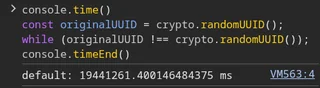
is this cryptomining?
crypto - as in cryptography, not cryptocurrency - is just the library he’s using to generate the 128-bit random UUID. The snippet is interesting because he matched the original UUID in just over 5 hours. You’d expect to need more than 10^38 guesses to pick the same number again, which, even at 1 guess every microsecond, means something like 10^22 years.
I wanted to downvote you for failing to pick up on the sarcasm, but then you went and did all that math that I was too lazy to do and I ended up upvoting you instead. Damn you!
Sorry, I forgot to add the
/s.But thank you for the calculation that is actually interesting :) Was thinking about that myself but didn’t bother to do the math.
Just thought its reminiscent of cryptomining as it also consist of guessing an arbitrary number for fun.
Internet sarcasm is hard, and lemmy has a very general audience :) I’m always happy when someone gives me an excuse to do the math I was already curious about - it’s often not worth it, for just my own curiosity, but even a sarcastic or disingenuous prompt reminds me that there’s other casually curious people out there.