

Cross posted from https://lemmy.zip/post/71891248
Cross posted from https://scribe.disroot.org/post/11438915
cross-posted from: https://scribe.disroot.org/post/11438860
Here is the podcast about this investigation.
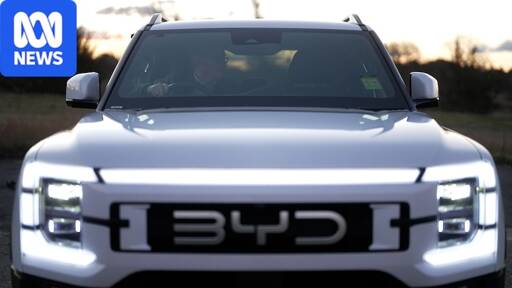
On a narrow country road outside Canberra, I’m driving a BYD Shark 6, the hybrid ute loved by tradies and even a cabinet minister.
But while I’m at the wheel, I’m not the only one in control; a hacker has access to the car.
As the 2.6 tonne ute rounds a bend, he gets to work.
…
With the stroke of a key, he kills the headlights, plunging me into darkness.
The attack is not a total surprise. The Shark has spent the past two weeks with Dan Hreszczuk, a cybersecurity expert who specialises in cars.
His task was to hack the vehicle and find out what could be seen and done remotely by the Shark’s Chinese manufacturer.
“It was easier than we were expecting,” Hreszczuk says.
…
EVs, with all their sensors, cameras and microphones, hoover up and spit out vast amounts of data. Experts say that data poses a greater risk in the hands of Chinese EV makers because they can be compelled by the country’s national security laws to co-operate with authorities.
…
Hreszczuk, the co-founder of Fortify Labs in Canberra, was stunned by the BYD Shark’s lack of cybersecurity.
“The access we took advantage of didn’t even have a password,” he says.
“It’s a little bit scary how open … the BYD Shark is to a hacker.”
…
While sabotage is one worry, the concern most often cited is surveillance due to the array of cameras and microphones on an EV.
Last year, the UK military banned Chinese EVs, even those made with Chinese components, from parking within 3 kilometres of some of its most sensitive locations.
China itself has previously banned foreign EVs from military sites and political enclaves, aware of their surveillance potential.
…
In Australia, there’s no blanket ban on Chinese marques by Defence, but ASIO has warned ministers and public servants not to have sensitive conversations in their cars or connect work devices.
…
When I pull into a service station and leave my phone unlocked in the car, Hreszczuk seizes his opportunity.
He’s done a simple audio edit, stitching together me saying “Hey Siri” and his voice asking a few questions to get the personal details he needs.
…
Using the car’s speaker system, Hreszczuk plays the voice command from his computer into the car.
“Hey, Siri, what is my home address?” the edited audio asks.
Siri replies, without questioning why I don’t know where I live.
Hreszczuk repeats this process and quickly extracts my date of birth and age.
Within minutes, he’s obtained the internet banking password.
…
Alastair MacGibbon, Australia’s former national cyber security adviser, says there needs to be greater protections for the data collected by all connected cars, and clearer rules about what data can be sent overseas.
MacGibbon says a cabinet minister should not be able to own a Chinese EV.
“China has always shown its strong desire to steal things, to surveil,” he says.
"No-one should be in any doubt that [Chinese EVs] are used in the same manner.
…
For real. I would imagine that the US agencies that have the same levels of access/authority could (maybe already do) have the same access as China to US cars. Pretty sure that the levels of real surveillance/spying can force access with the ability to gag the manufacturers from taking to open court via national security. If that doesn’t work, they can flip already existing employees or get agents hired at the companies without the company itself knowing to insert backdoors (or find zero-day stuff that they will not disclose to keep as long as possible).
At least with China the nature of known laws regarding forcing compliance is more or less known. With the US it is much more hidden and pretend “it can’t be done because laws.” Anything the US claims the “evil CeeCeePee” does/could do are shit the US already can/does do to spy on/fuck with stuff sold to citizens and people buying abroad. If Chinese computers/infrastructure components can’t be trusted because “they might”, then no one should trust the same things from the US for the same reasons. Any nation with advanced tech and major “defense” budgets can (or eventually) get access to any of the computer/“smart” tech. But China is always painted as being “evil/scary” by default to make people think the US or other major powers don’t actively do the same or more of it.
The real problem with EVs (and combustion cars with so many bells and whistles) are how much more attack surface for governments or even hackers that just love finding flaws just for pranks. The more computers in the cars that replace previously analog items means more ways to gain access. Hell people act like people with FlipperZero or similar tools weren’t showing lack of security with unlocking, starting, etc. cars and showing it online it can be done. And that insurance, manufacturers, or companies like All Star can disable cars for lots of reasons, and get data from the passengers and their devices (and sell that data).