

0·
8 days agoCan it even be called FOSS if nobody owns the copyright?
Can it even be called FOSS if nobody owns the copyright?

Are girls allowed?

Try the nightly build:
I would look at the tools that the preservation groups use for doing this. The optical media layouts are funky and IIRC using dd on the block device is not enough to archive a bit-for-bit copy. There are details about the track layout and so on that need to be recorded separately. This is why formats like BIN/CUE exist.

What exactly is the problem that you’re trying to solve?
Oh I see. If the URL puts the sensitive information after the anchor, like https://example.com/bsod#sensitive-info-goes-here then the browser would never send that part to the server. Everything after the anchor is just used locally by the browser to scroll the page to a specific place (or in this case for the javascript to read and process).
You’d need to check every time you scan a QR code though that the # is in the URL and it’s not malformed. Trivially replacing the # with a ? would turn the private URL into one that sends all the data in the GET request. It’s training users to do something risky.
Oh and it also assumes that the javascript hasn’t been tampered with to upload the data somewhere.
I don’t like it.
So it’s leaking information about your system to an external site?
That’s just what we need.
Yeah I mean to you it might be pretty simple lego :) but I’m sure lots of people would benefit from it. Even if not to use the same exact setup then to provide an example or starting point for DIY.
Are you planning on sharing the source?

I’ve only recently adopted AI, and only sparingly, mainly for debugging, tests and help with documentation.
I wonder who came up with the name and the logo 🤣
It’s worth learning nftables, it’s actually pretty cool.
This guy is unhinged, and if you’re going to recommend his channel then you should watch this first: https://www.youtube.com/watch?v=r2SG4T0wymk&t=1360s
Perhaps he’s not a great recommendation after all.
IIRC Tor Browser makes its own connections to Tor within the application, it doesn’t use the Tor daemon even if one is running.
As a regular user that’s fine, but if your script might be run as root then there’s a possibility that you delete the special file /dev/null which would cause a great deal of problems for your system and probably be hard to debug if you don’t realise it has happened. I’ve heard of people doing this before so I think it is possible although I’ve never tried it.
Edit: yeah I just saw your edit and I agree :)
rm -rf ${TEMPDIR:-"/invalid"}
This on the other hand I like a lot. Now I will not stop doing my other additional checks, but for good habit this can’t be wrong.
I believe this is considered to be best practise, but I included the other options just for the sake of completeness.
Happy to help.
Some solutions:
set -e
TEMPDIR=$(mktemp -d)
# script exits if mktemp returns error
or
TEMPDIR=$(mktemp -d || echo "/invalid")
# TEMPDIR gets the value "/invalid" if mktemp fails
or
TEMPDIR=$(mktemp -d)
TEMPDIR=${TEMPDIR:-"/invalid"}
# TEMPDIR gets the value "/invalid" if mktemp returns an empty value
or
TEMPDIR=$(mktemp -d)
rm -rf ${TEMPDIR:-"/invalid"}
# rm is passed "/invalid" if TEMPDIR is empty
My personal preference is the last one. Any time you call rm -rf you provide a default value to variables to ensure that if they are empty they get some other value instead.
Your post history:
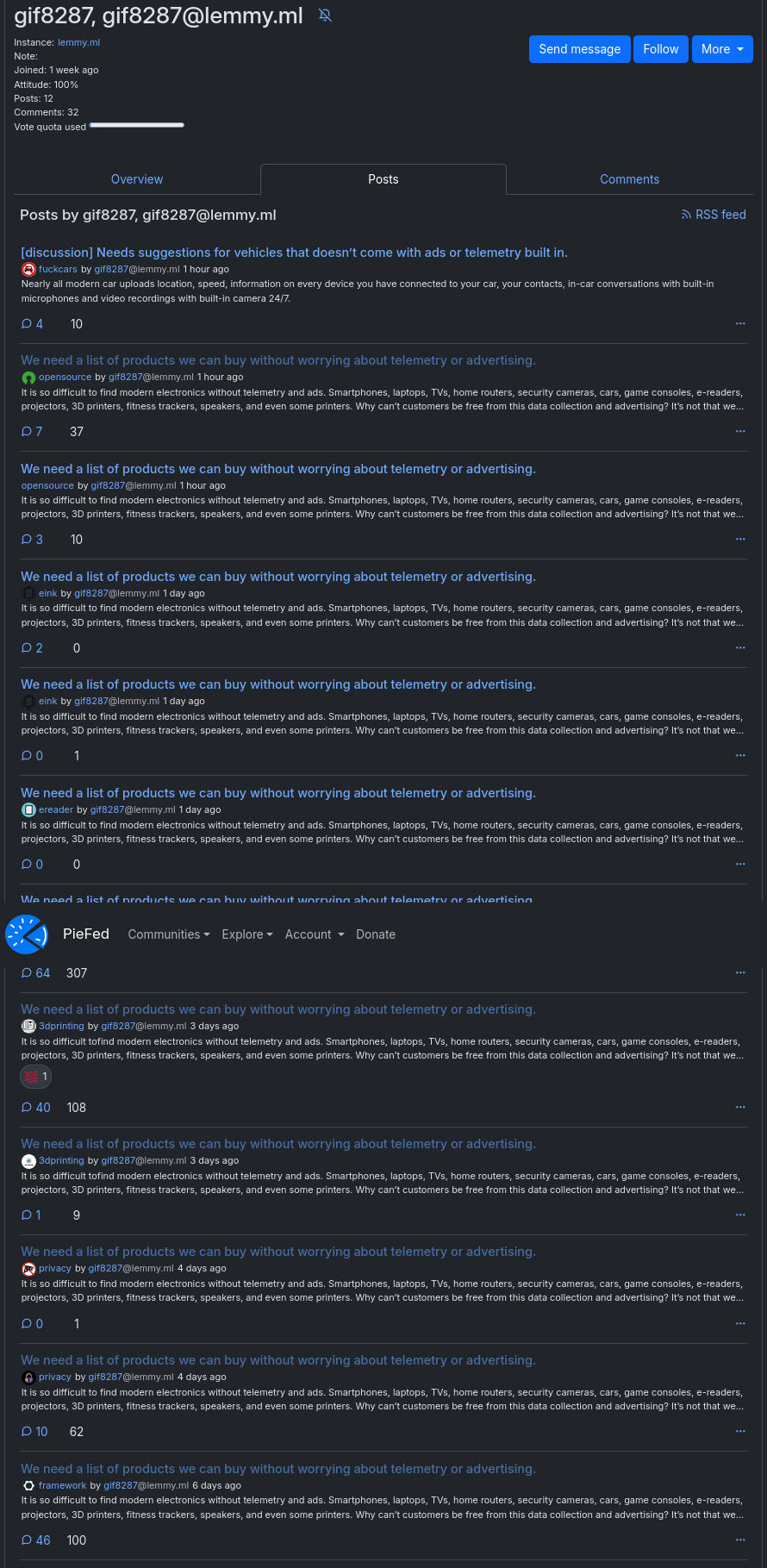
I’m subscribed to all of these communities, so in my feed it appears as spam. Could you please stop?
GrapheneOS has ported its code to QPR1 before Google even released it, but still doesn’t have permission to ship that work.
Huh? What do they need permission for?
I had no idea that GrapheneOS was so dependent on Android as an upstream project.

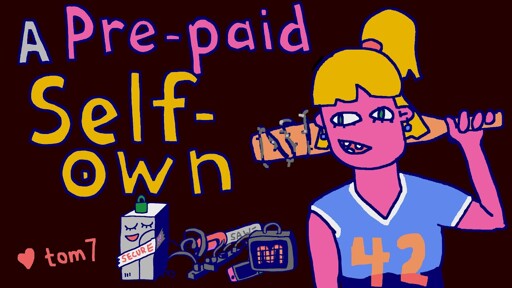
not that lowkey if you made a meme about it, is it